
Experts Kept Repeating The Same Warning This Summer: The Mask In Your Junk Drawer Won't Stop Wildfire Smoke
Record smoke blanketed 18 states and most of central Canada in July. Health agencies were blunt about which masks work — and which ones only feel like they do.

By mid-July, the numbers had stopped sounding like weather. Chicago's air-quality index hit 511 — on a scale that's supposed to top out at 500. Toronto briefly posted the worst air of any major city in the world. More than 115 million people woke up under "unhealthy or worse" air in the same week, and one Toronto hospital network reported an 80% jump in respiratory ER visits.
And on sidewalks from Minneapolis to Montreal, people responded the way you'd expect: they dug out whatever mask was still in the junk drawer from 2021 and headed out the door.
That, air-quality experts spent the entire month explaining, is the problem.
The mask you saved is the wrong mask
The message from health authorities was unusually blunt this summer. The EPA's own wildfire guidance states plainly: "Cloth masks will not protect you from wildfire smoke." Health Canada's guidance is just as direct about cloth and surgical masks — they don't fit the face well, and the materials aren't built to filter smoke particles. Scarves, bandanas and neck gaiters don't make the list at all.
The reason comes down to two failures. The first is the filter itself: wildfire smoke is dominated by fine particulate matter — PM2.5, particles roughly 30 times thinner than a human hair — small enough to slip deep into the lungs and cross into the bloodstream. Cloth was never designed to catch particles that small.
The second failure is the one most people never think about: the seal. In published fit testing, roughly 44% of the air moving around a surgical mask never passes through the filter material at all — it leaks in around the edges. For a two-layer cloth mask, leakage hits 70%. The filter can't stop what never touches it.

That's why every expert quoted this month pointed to the same category: a sealed respirator-style mask — not a leftover from the pandemic.
What people are switching to
The mask that kept selling out this July wasn't a hospital product at all. The BodyFont Air Mask is a reusable mask designed around exactly the two failures experts kept describing — with replaceable filters independently tested to the KN95 standard (at least 95% capture of particles down to 0.3 microns) and a fit system built to actually close the gaps: moulded nose foam, an adjustable aluminium nose wire, and soft ear loops that hold a seal for hours.
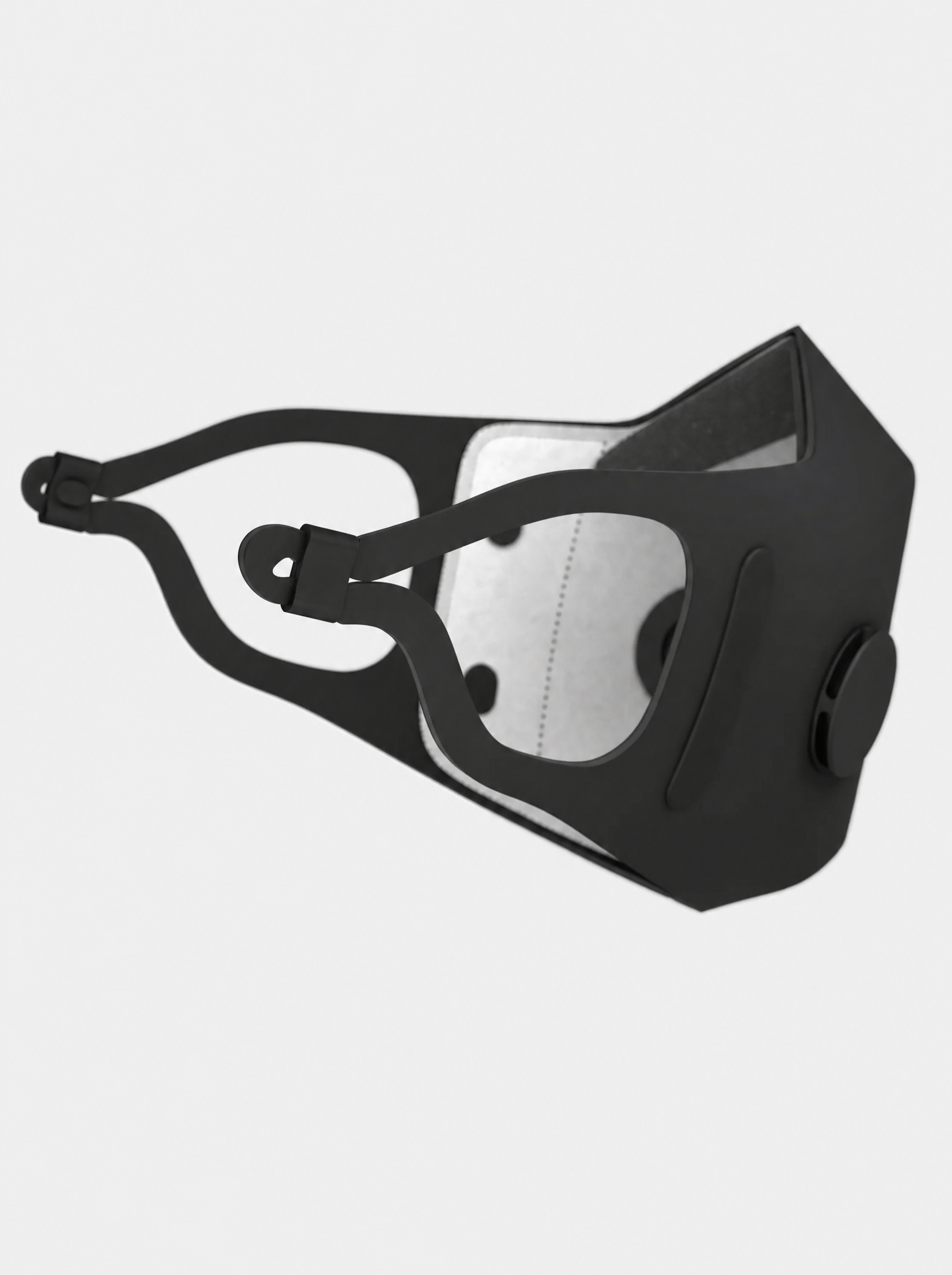
Three details separate it from the disposables people were lining up for this month. First, it's reusable — the outer skin machine-washes clean after ashy days, and only the filter gets replaced, about once a month. Second, dual stainless-steel exhalation valves vent heat and moisture on the way out, which mattered in July's combination of smoke and heat-dome temperatures — no fogged glasses, no soaked fabric by lunch. Third, that activated-carbon layer means smoky days stop smelling like a campfire.
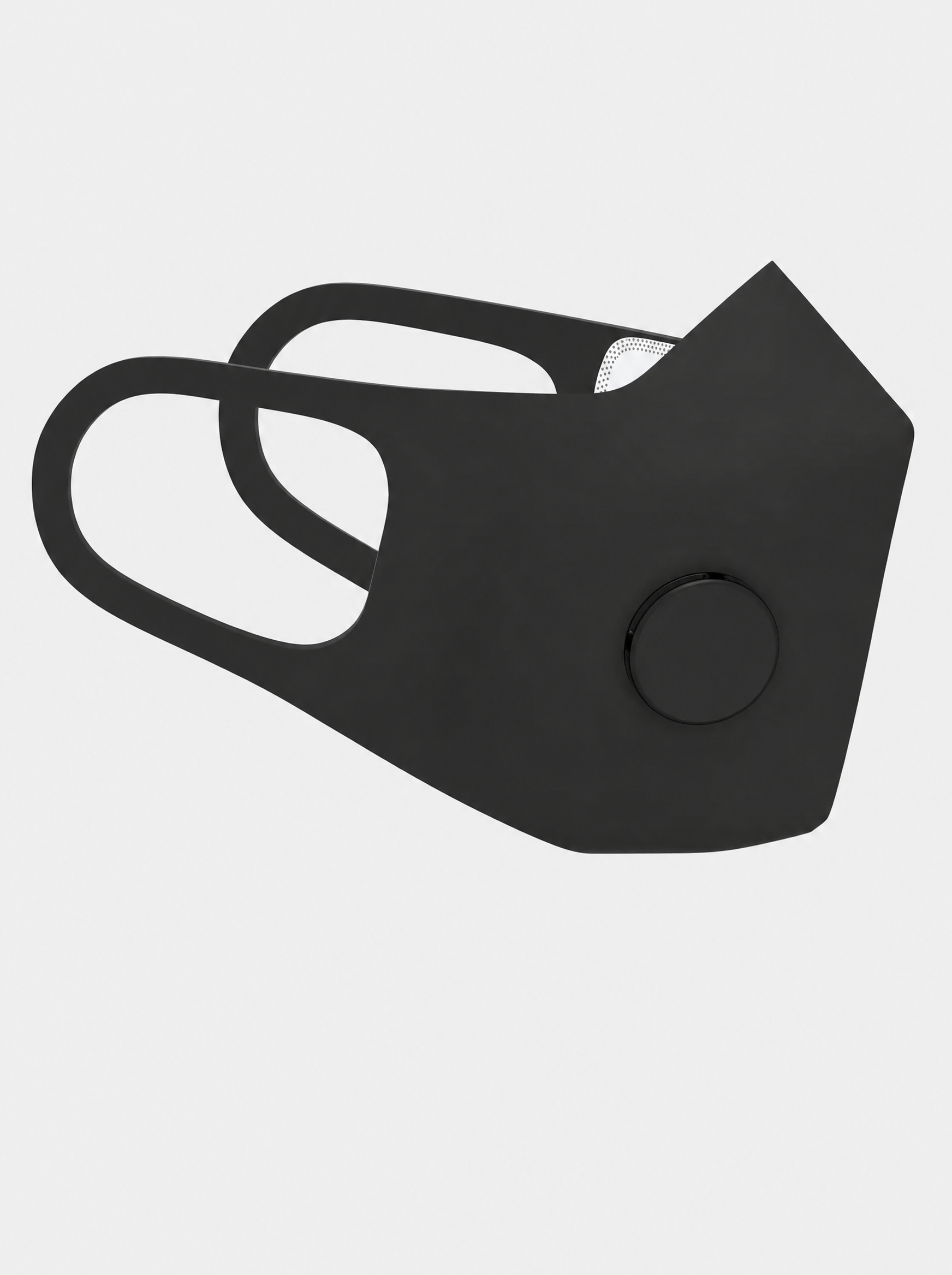
The BodyFont Air Mask — $49
Reusable mask with replaceable filters tested to the KN95 standard. Sealed fit, carbon layer, dual valves. Washable skin, filters that last up to 28 days. 30-day guarantee.
Shop Now → In stock · ships in 1–2 daysWhen to actually put it on
The simplest habit to come out of this month: check the air-quality number already sitting in your weather app. Millions of people saw it for the first time in July — most didn't know what it meant.

In the U.S. (AQI, 0–500): over 100 means sensitive groups should limit time outside. Over 150 — the red zone — is unhealthy for everyone, and the level where health departments recommend a sealed mask outdoors. Chicago hit 511 this month.
In Canada (AQHI, 1–10+): at 4–6 (Moderate Risk), at-risk groups — asthma, heart conditions, seniors, kids, pregnancy — should cut back strenuous time outdoors. At 7+ (High Risk), that caution applies broadly. Toronto hit 10+ this month.
And don't rely on your nose: by the time you can smell smoke, the particles are already in the air you're breathing.
It's not just lungs anymore
A study published in JAMA Network Open this month — nearly one million emergency-department visits across Alberta and Ontario — found migraine and headache ER visits rose about 6% during wildfire-smoke waves, and roughly 9% among teenagers. Notably, ordinary urban pollution at the same particle levels showed no such effect. Wildfire smoke, the data keeps suggesting, is its own animal — researchers behind the study recommended respirator-style masking and indoor air filtration during smoke events.
Add that to what the month's coverage already catalogued: burning eyes, coughing and chest tightness in healthy adults; a rough equivalence — via one UCLA pulmonologist — between breathing AQI 100–200 air and smoking up to half a pack of cigarettes a day; and elevated risks for children, seniors, outdoor workers and anyone with heart or lung conditions.
Why it lands harder after 60
Read the advisories from any health department this month and the same groups get named first, every time: older adults, and people with heart or lung conditions. That ordering isn't accidental.
Lungs change with age. The natural clearance systems that sweep fine particles back out get slower and less efficient, and decades of ordinary wear leave less reserve capacity to absorb an insult. So the same smoky afternoon that gives a 30-year-old a scratchy throat can put a 70-year-old into a week of tightness, coughing and poor sleep.
And PM2.5 doesn't stop at the lungs. Particles that fine cross out of the air sacs and into the bloodstream, which is why coverage this month kept stressing that this isn't only a breathing problem. As IQAir North America's chief executive put it in Canadian coverage: “it's not just respiratory health it's also cardiovascular.” For anyone already managing blood pressure, a heart condition, COPD or asthma, a smoke day is a stress test on two systems at once.

The hospital numbers this month tracked exactly that. One Toronto hospital network reported respiratory ER visits up 80% in a single week. During the 2023 smoke event, asthma-related ER visits rose roughly 20%. And the Canadian Lung Association's position leaves little room for hedging: there is no safe level of wildfire smoke.
How much difference the right mask actually makes
The fair question is whether a mask moves the needle at all, or just makes you feel better about going outside. Researchers have actually run that number.
A modeling study out of Colorado State University looked at what would happen across a whole population during a real smoke event depending on what people wore. The finding: widespread use of respirator-style masks cut smoke-attributable hospital visits by roughly 22–39% — call it a third. Surgical masks landed near 17%. Cotton masks managed about 6%.
That gap is the whole argument. It's not mask versus no mask — it's the difference between a token gesture and a measurable reduction in the number of people who end up in an emergency room. At the material level, respirator-class filters are measured at 98–99.5% efficiency against smoke particles; the BodyFont filter is tested to the KN95 benchmark at 95%+ capture down to 0.3 microns, the hardest particle size to catch.
How to wear it so it actually works
Every expert quoted this month attached the same condition to their recommendation: if it fits properly. A certified filter with a gap at the cheek is a certified filter you're breathing around. Most of the protection is won or lost in the thirty seconds after you put it on.

- Put it on before you step out — not once you smell smoke. By the time you can smell it, you're already breathing it.
- Shape the nose wire down over the bridge of your nose with two fingers, not one — press along both sides.
- Cover nose, mouth and chin. A mask under the nose is a scarf.
- Breathe in and watch it. The mask should pull slightly inward against your face, with no air slipping in at the cheeks or sides. That's the seal doing its job.
- Fogged glasses mean a leak at the top — reshape the nose wire and check again.
- Facial hair breaks the seal. Stubble is workable; a full beard isn't, on any mask.
- Stop pulling it down. Each re-seat is a fresh chance to lose the fit — and a lungful of what you were avoiding.
- Swap the filter after a heavy smoke stretch, or when breathing starts to feel like work.
None of that is complicated, and none of it is unique to one brand — it's the same guidance every health agency published this month. It's simply the difference between owning the right mask and actually getting the protection it was built to deliver.
An honest note on limits
No consumer mask — this one included — filters smoke gases like carbon monoxide; particulate filtration is the job. Respirator-style masks aren't made for children under two, facial hair breaks any seal, and on "Hazardous" days the best protection is still limiting time outside with indoor air filtration running. A good mask is the tool for the hours you can't avoid being out there.
The bottom line
Smoke season came back this year bigger than the one before it, and the experts have stopped hedging: this is a recurring season now, like heat waves — and the mask from 2021 was never built for it. If this summer taught anything, it's that the time to own the right one is before the sky turns orange.
| BodyFont Air Mask | Cloth / surgical | |
|---|---|---|
| Sealed fit at nose & chin | Yes | No — leaks 44–70% |
| Filter tested to KN95 standard | Yes | No |
| Carbon layer for smoke smell | Yes | No |
| Reusable all season | Yes — washable | Cloth only |
| Valves for easy breathing | Yes | No |
Get smoke-season ready
The BodyFont Air Mask is $49 with free shipping over $75 and a 30-day guarantee — wrong size swaps are free. Two sizes; most adults fit Medium.
Shop Now →Filtration figures refer to independent laboratory testing of the filter material against the KN95 benchmark (GB2626). This product is not a NIOSH-approved N95 respirator and is not a medical device. Statistics referenced above are drawn from July 2026 public reporting and government air-quality guidance; survey-style satisfaction figures used in advertising are being finalized and shown as placeholders where marked.